My Account
 Cart
Cart


Itchy eyes. Watery eyes. Eyes that feel tired after thirty minutes of screen time. Discomfort that no eye drop seems to fix permanently. If this sounds familiar, you may have Meibomian Gland Disease — MGD — one of the most common and most underdiagnosed eye conditions.
Most people have never heard of it. But the symptoms are unmistakable — and they will not resolve until the underlying condition is addressed.
What Are Meibomian Glands?
Meibomian glands are vertically oriented glands embedded in the eyelids. They produce an oily substance that forms the outermost layer of the tear film — the thin coating that covers the surface of the eye. This oil layer is critical: it prevents the watery component of tears from evaporating too quickly.
Without a stable, high-quality oil layer, tears evaporate rapidly. The eye surface becomes dry, inflamed, and uncomfortable.
What Happens in MGD
In Meibomian Gland Disease, the oils produced by these glands become abnormally thick — they solidify at room temperature rather than remaining fluid at body temperature. As a result, they cannot spread freely across the eye surface. The oil layer breaks down. Tears evaporate quickly. The eye becomes dry, irritated, and inflamed.
This is the underlying cause of most cases of computer vision syndrome, chronic eye irritation, excessive watering (a reflex response to dryness), and eye fatigue.
Short-Term Relief
- Warm compresses — applying a warm cloth to closed eyelids for 5–10 minutes liquefies the thickened meibomian oils and helps them spread across the eye surface. This is the most effective immediate symptom relief and should be done daily
- Lubricating eye drops — artificial tears supplement the moisture layer and provide symptomatic relief
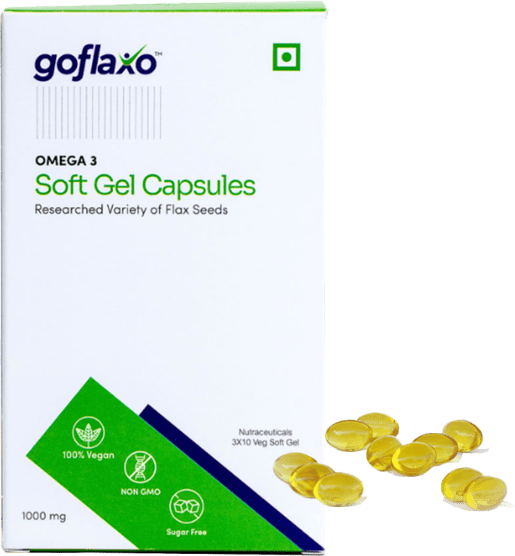
Prevention — Where Omega-3 Fatty Acids Come In
Why do meibomian oils thicken in the first place? The answer lies in their fatty acid composition.
Meibomian gland secretions are composed of fatty acid chains. When omega-3 fatty acids — the good fats — are present in sufficient quantity, these oils remain fluid and spread smoothly at body temperature. When omega-3 levels are low, they are replaced by alternative fatty acids that have a slightly higher melting point. The result: oils that solidify at normal body temperature, the hallmark of MGD.
Supplementing with omega-3 fatty acids raises the body’s omega-3 status, enabling the meibomian glands to produce secretions with the right composition — fluid, stable, and effective at protecting the eye surface.
The Practical Takeaway
MGD is a condition where the quality of the body’s internal chemistry is directly reflected in the quality of the eye’s protective film. No eye drop addresses that at the root. Omega-3 supplementation — consistent and sustained — does.The body is remarkably capable of restoring its own balance when given the right ingredients.
 Previous Post